Management of Chemical & Pest – Commitment to reduce our Impact (Hazardous Chemicals & Pesticides)
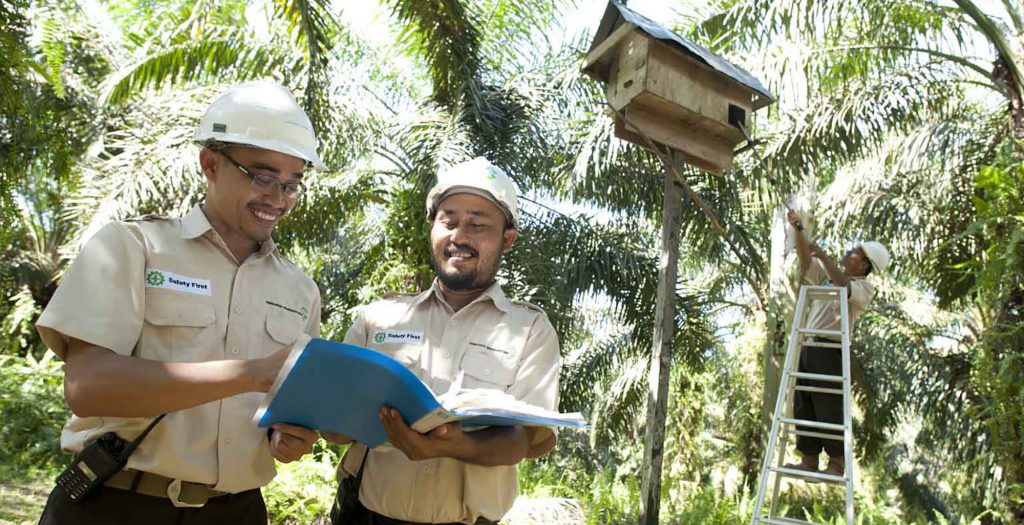
DSNG is committed to alternative reduction efforts by implementing an Integrated Pest Management (IPM) system:
- Prioritising natural methods: the use of natural enemies, predators, parasitoids, and entomopathogens.
- Utilising environmentally friendly bio-insecticides as a substitute for chemicals.
- Planting plants such as Turnera subulata and Antigonon leptopus to support natural predator habitats.
- Using technical controls only when biological methods are ineffective, while maintaining ecosystem sustainability.
- Engage a team of experts to monitor field conditions regularly.
In its application in the field and storage, we minimize contamination and pollution from fertilizers, pesticides and other chemicals, this commitment applies to all our suppliers. The use of agrochemicals is intended to maintain soil fertility and high yields. Currently, we are working towards adopting 100% of bio-insecticides and natural predators for pest control.
Biological control by utilising natural enemies from predators, parasitoids and entomopathogens that will naturally suppress pest populations so that there is a balance and does not pollute the environment. Technical control will be implemented as the last alternative if natural and biological control is unable to significantly suppress pest populations. For support the breeding and conservation of insect predators and pest parasitoids Palm Oil Leaf-eating Caterpillar (UPDKS) We make efforts by propagating useful plants that are home to predatory/parasitoid insects in the field. Some of the plant species used in this conservation are Antigonon leptopus, Turnera subulata, Turnera ulmifolia, Euphorbia heterophila, Nephrolepis sp., Celosia sp., and Cratoxylum spp.
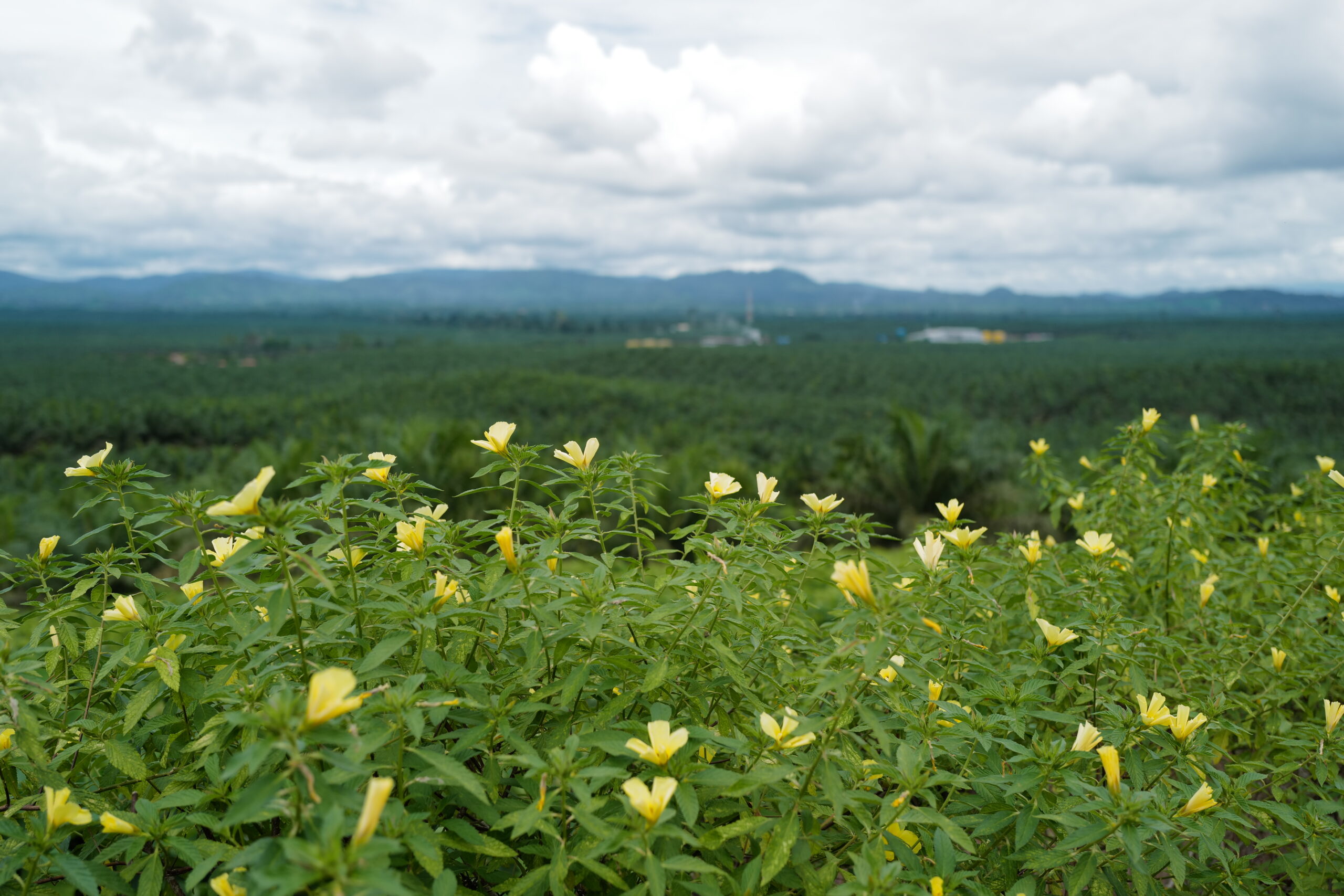
Conservation Area for Parasitoids/Pest Predators UPDKS
As responsible member of RSPO we abide by Indicator 7.2.5 of the RSPO P&C 2018, which does not permit the use paraquat as well as other pesticides categorised as Class 1A or 1B by the World Health Organisation, or those that are listed by the Stockholm or Rotterdam Conventions, unless in exceptional circumstances. This commitment applies to all our suppliers.
List of Chemical & Pesticides *)
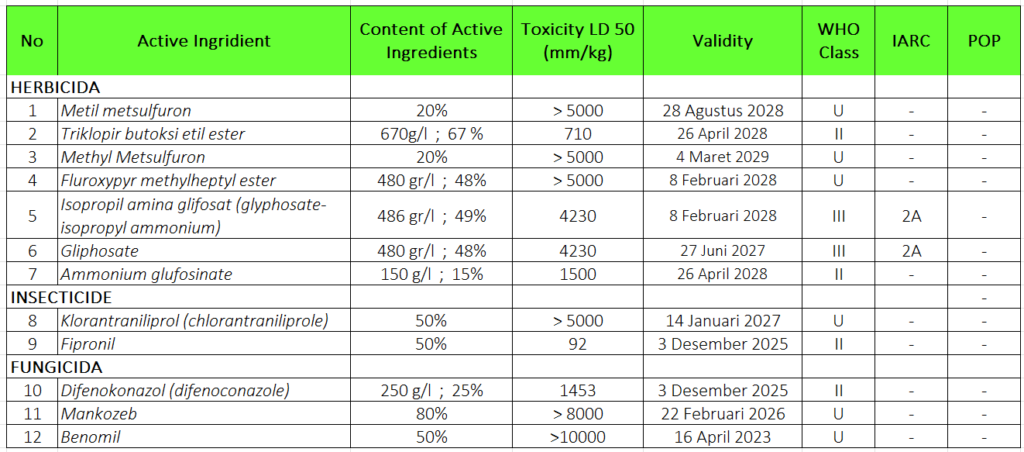
*) The list of pesticides above is the pesticides used from 2022 to 2025.
Therefore, we are committed to using chemicals wisely to support environmental sustainability and soil health. Integrated management is implemented, prioritizing natural solutions, such as bio-insecticides and natural enemies, while chemical use is carried out according to safety standards to minimize environmental impact. Chemical use is measured and only when necessary, with priority given to bio-insecticides and natural enemies. Regular training is provided to employees and farmers to ensure safe and procedural practices. In 2025, we used approximately 19 types of pesticides, with a total application of 34.74 kg of active chemicals per hectare.
Alternatives to Pesticides
- Development of Biofungicides and Bioinsecticides
DSNG is committed to reducing the use of chemical inputs through safer fertilization practices, proper storage in accordance with applicable standards, and the increased application of bioinsecticides. The Company also continues to promote the adoption of 100% bio-insecticides for the control of major oil palm pests.
2. Development of Natural Predators: Barn Owls (Tyto alba)
The utilization of barn owls (Tyto alba) is being developed as a natural predator for rodent control within DSNG’s oil palm plantations. During 2025, a total of 12 Tyto alba individuals were bred and released as part of environmentally friendly and sustainable biological pest control efforts.
3. Development of Host Plants
The use of host plants is promoted to naturally enhance populations of predators and parasitoids as part of sustainable biological pest management. Various plant species, including Antigonon leptopus, Turnera subulata, Turnera ulmifolia, Euphorbia heterophylla, Nephrolepis sp., Celosia sp., and Cratoxylum spp., are planted to support ecosystem stability within plantation areas. In 2025, the planting of Turnera sp. as a beneficial plant exceeded the annual target by more than 7%, covering a total of 1,921 plantation blocks.
4. Development of Sycanus Predators
The utilization of the natural predator Sycanus is being developed as part of the Integrated Pest Management (IPM) strategy in oil palm plantation areas to suppress leaf pest populations and reduce dependence on chemical insecticides. The breeding program, which commenced in July 2025, is supported through habitat management and the development of host plants. During 2025, a total of 270 Sycanus individuals were bred and released as part of sustainable biological control efforts.