Traceability
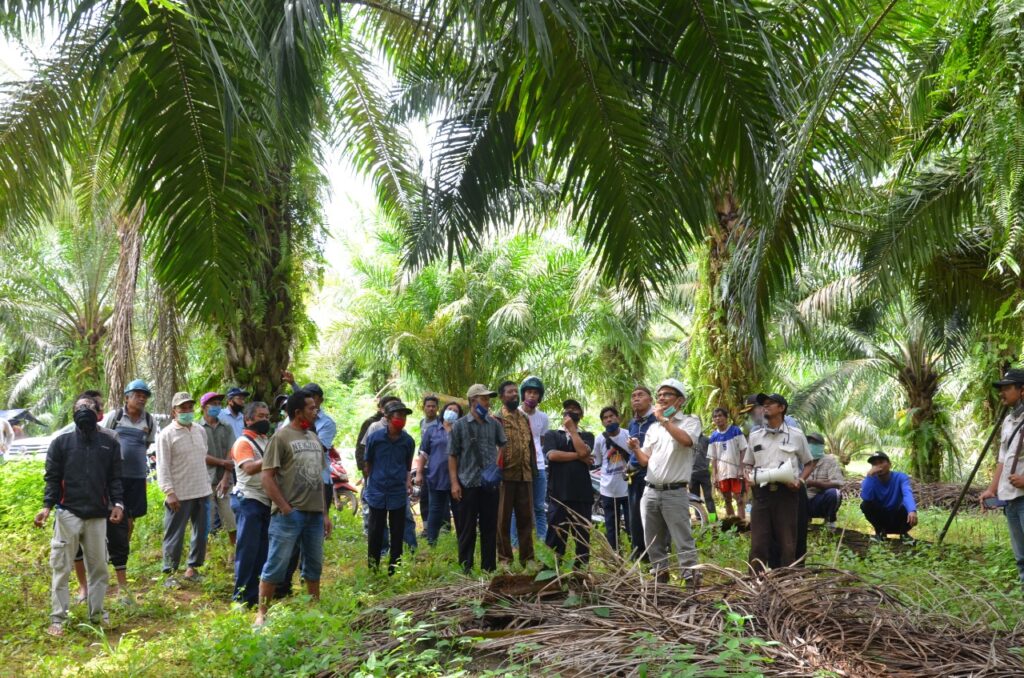
Traceability is an important first step for DSN Group in building relationships with third-party suppliers. Through engagement and efforts to earn their trust, we have been able to be on track in our supply chain transformation. Our efforts in this area are translated through “Engagement” programmes and strategies, among others through our engagement with suppliers to then share best practices and commitments.
DSN Group is building a traceable supply chain as a means of providing sustainable agribusiness solutions in the supply chain. To achieve this, we are working with our suppliers and buyers to build further understanding on sustainability including the “NDPE Policy”. This is also to help our suppliers to adopt better and sustainable practices in their own businesses.
In the Palm Oil Business Unit, DSNG receives Fresh Fruit Bunches (FFB) from three main sources: Nucleus Plantations, Plasma Plantations, and External Suppliers. External suppliers are further classified into three categories: plantation companies outside the DSNG Group, Self-Help Cooperatives, and FFB Agents or Collectors.
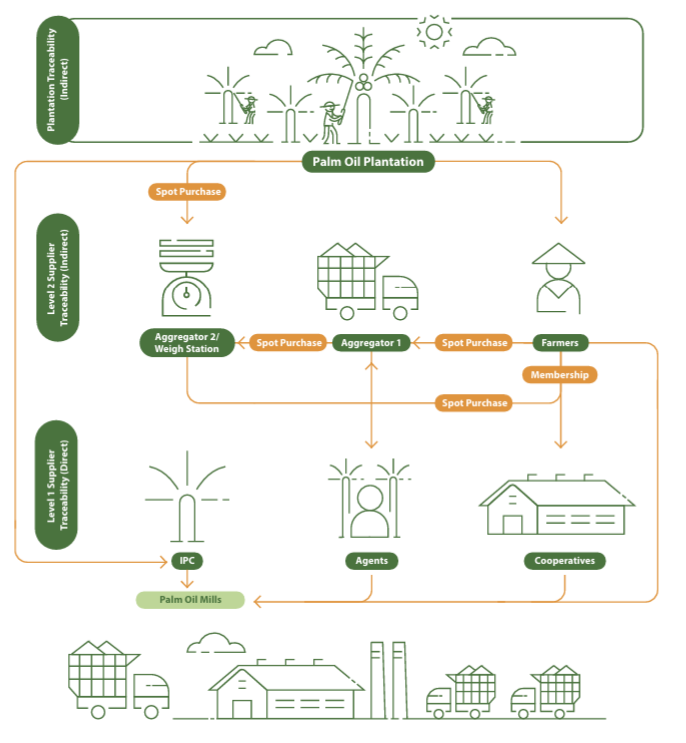
DSNG conducted supply chain identification for all FFB supplies, particularly external suppliers. The identification process was carried out down to the level of the FFB-producing plantations supplying DSNG’s palm oil mill units. During 2025, DSNG’s palm oil mills received no FFB shipments from new suppliers. DSNG conducted supply chain identification for all FFB supplies, particularly external suppliers. Overall, DSNG’s FFB traceability to plantation (TTP) reached 97.76% in 2025.
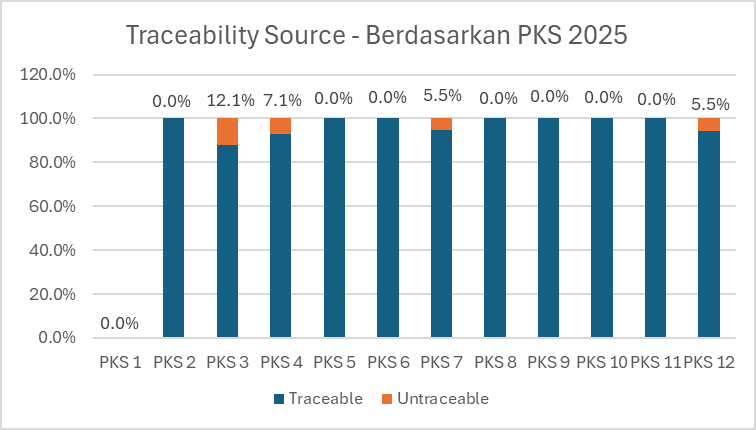
DSNG operates a palm kernel crushing plant (KCP) in Muara Wahau to produce palm kernel oil (PKO). The KCP’s processing capacity is 400 tons per day. All palm kernel processed at the KCP comes 100% from DSNG’s palm oil mill (PKS) units in East Kalimantan. Therefore, all palm kernel supply sources have achieved 100% traceability to the mill (TTM) and 99.48% traceability to the supplier plantation (TTP).
In its wood products business unit, the Company has implemented an inventory and supply chain traceability system, extending to community agroforestry plantations, using the e-RawMat application. The Company collaborates with sengon farmers and wood-collecting partners to meet the supply of sengon wood obtained from managed community forests. This sengon wood comes from traceable sources and complies with the Sustainable Legality Verification System (SVLK) as the raw material for the Company’s wood products. In terms of traceability, the supply of wood and wood products from the Wood Products Business Unit has achieved 100% traceability down to the supplier level, including depots, agents, PTPN, and other suppliers.
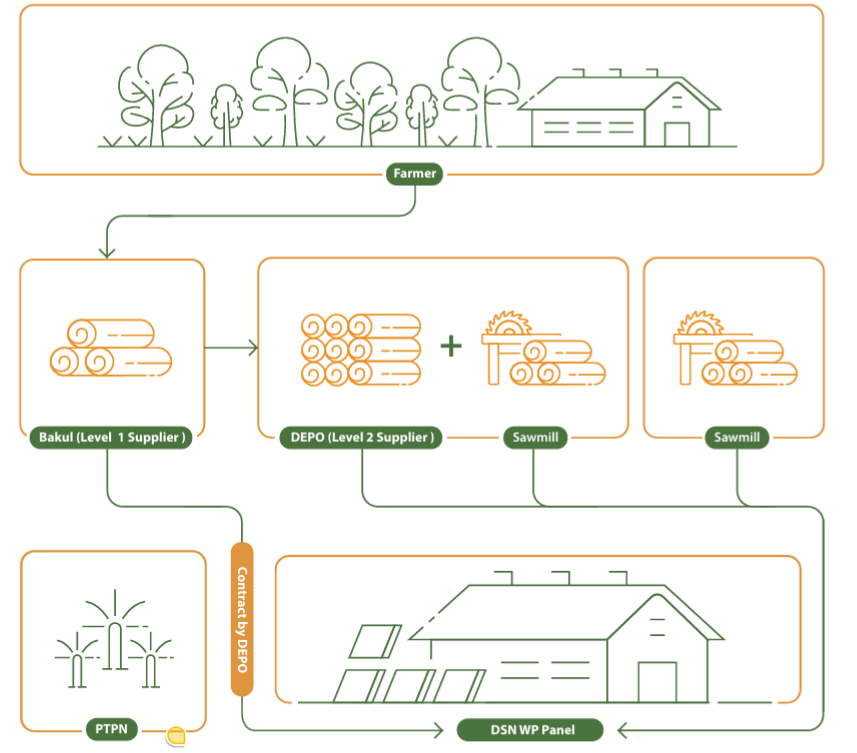
For wood pellet production, raw materials are obtained from residual materials, such as twigs, sawing residues, and veneer waste from sengon, mahogany, and acacia logs, sourced from Community Forests through partnerships with local farmers and collectors. All wood raw materials used comply with applicable legal requirements, including the SVLK (Standardized Versatile Versatile Forest) certification (SVLK), and are supported by traceability mechanisms to ensure compliance and transparency in the renewable energy supply chain.
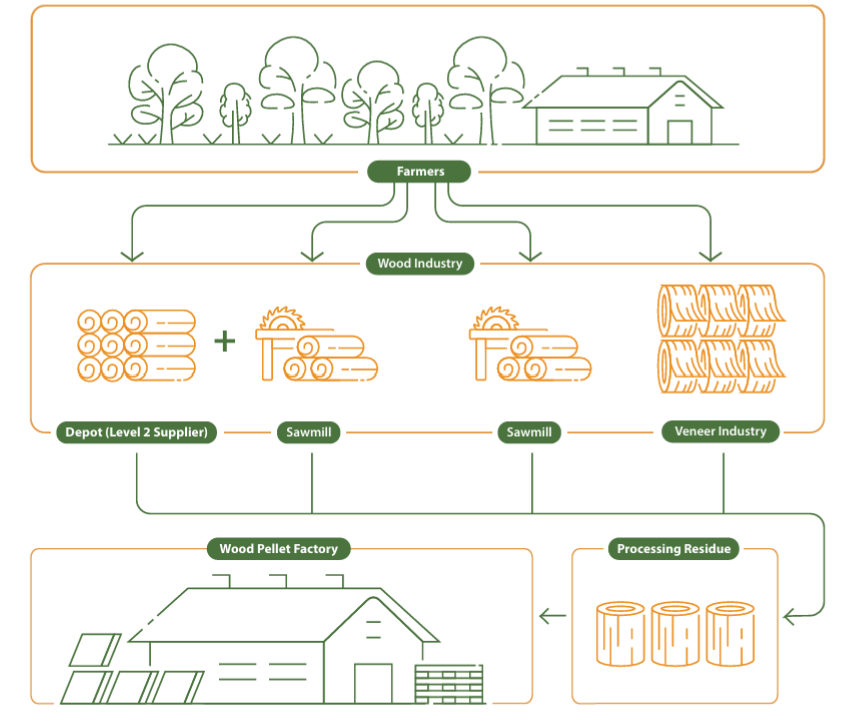
By 2025, the Renewable Energy Business Unit (Wood Pellets) will achieve 100% traceability to suppliers including depots, sawmills, agents, and other suppliers, with a total wood volume of 76,098 tons originating from sengon, mahogany, and acacia, including twig wood, wood cutting residue, and veneer waste residue.
Full details can be found in our NDPE Report dan Sustainability Report