Protection of Biodiversity, Habitat, & River Buffer Zones
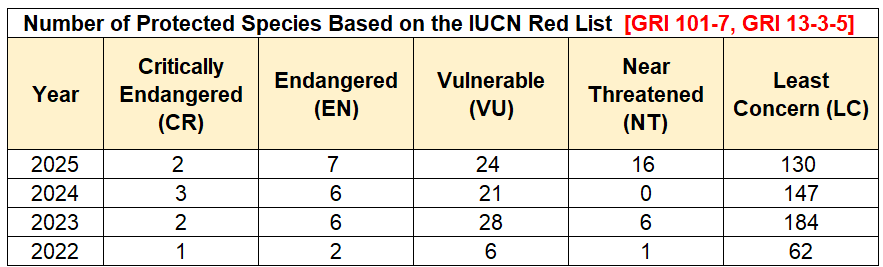
DSN Group is committed to preserving protected species based on Indonesian government regulations, as well as rare, threatened, and endangered species listed on the “IUCN Red List”. We prohibit hunting, distributing, trading, breeding, harming or killing any species on our plantation & supplier, except for hunting by local communities for food needs without reducing the population of the species. We do not use genetically modified organisms (GMOs) and do not conduct animal testing.
As a guide the implementation of our commitments, DSN Group has implemented the “Conservation of Protected Animals and Plants” procedure, which refers to the IUCN Red List and underlies the list of protected species within our HCV/HCS conservation areas. The Company’s sustainability commitments include the protection of HCS and HCV areas within its concessions. The company adheres to the RSPO, ISPO and International Finance Corporation (IFC) PS 6 principles, with responsible practices to maintain environmental balance and biodiversity.
The socialization of the procedures and list is carried out using several methods, namely by installing warning boards and pictures of protected animals, face-to-face socialization to employees, students, and communities around the plantation. We also strictly prohibit any form of animal testing in our company.
Biodiversity Monitoring
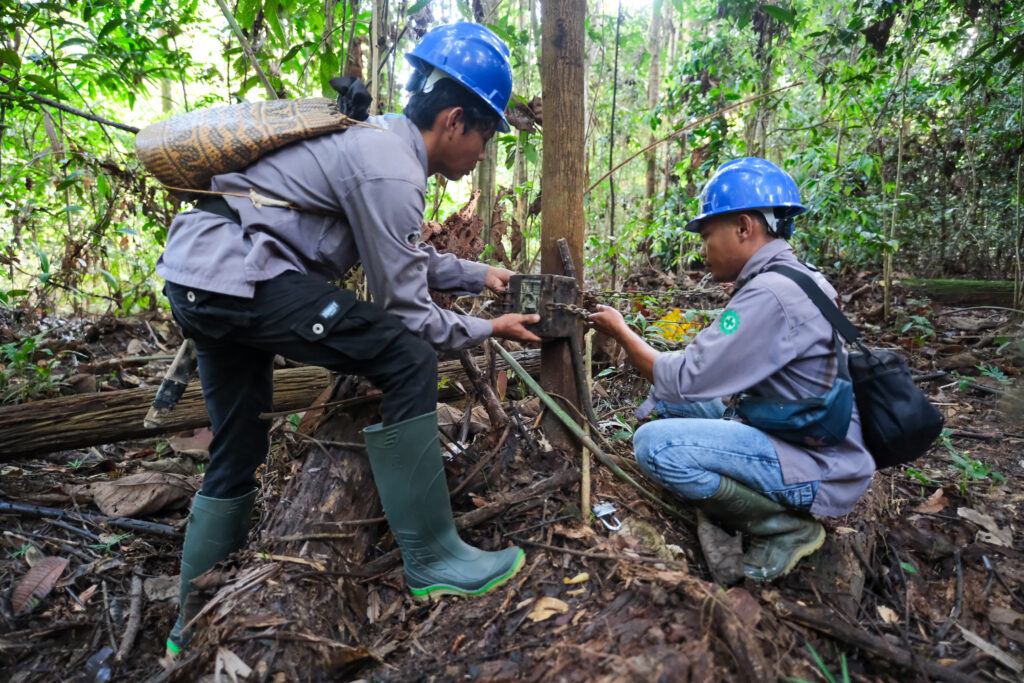
We have implemented activities that support the company’s commitment to environmental conservation and sustainable palm oil production. We make various efforts to conserve biodiversity, especially for ecosystem habitats and flora and fauna around our operations and outside our operations.
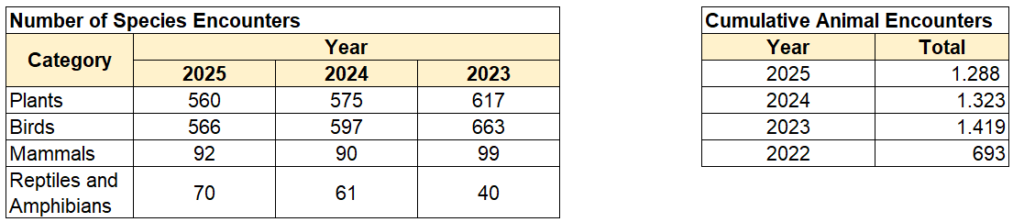
We continue to monitor biodiversity as part of our commitment to environmental conservation and sustainable palm oil production. In 2025, we recorded 566 bird sightings, 92 mammal sightings, and 70 reptile and amphibian sightings, as well as the identification of 560 plant species in the Company’s conservation areas. The 2024 wildlife monitoring results increased from 717 in 2023 and 693 in 2022. This high number of species demonstrates the high biodiversity in the area, reflecting the health and diversity of the ecosystem.
Number of Species Encounters and Cummulative of Animal Encounters in 2024
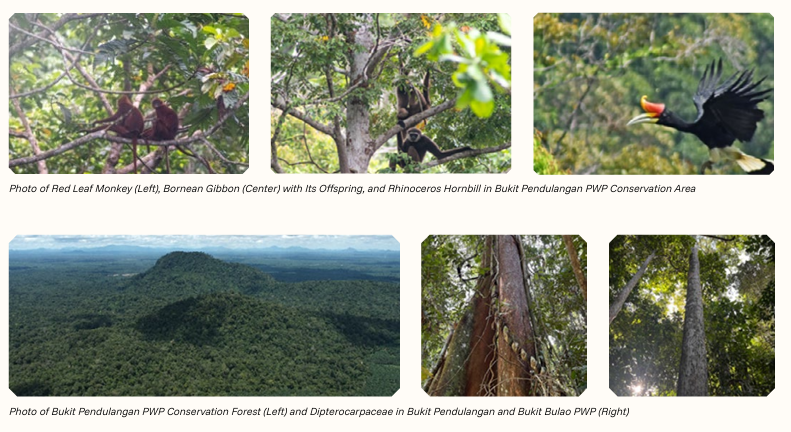
In 2020, the DSNG conservation team conducted a survey of orangutans (Pongo pygmaeus) in the PT Dewata Sawit Nusantara conservation area and found 4 orangutans; 2 adults and 2 juveniles.
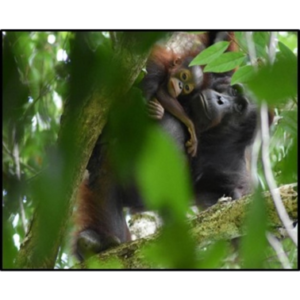
Orangutan (mother and child) spotted in PT Dewata Sawit Nusantara Conservation Area
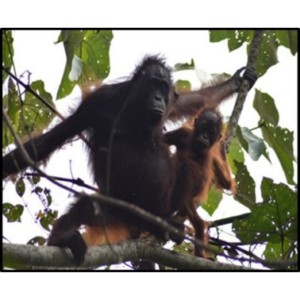
Orangutan (mother and child) spotted in PT Dewata Sawit Nusantara Conservation Area
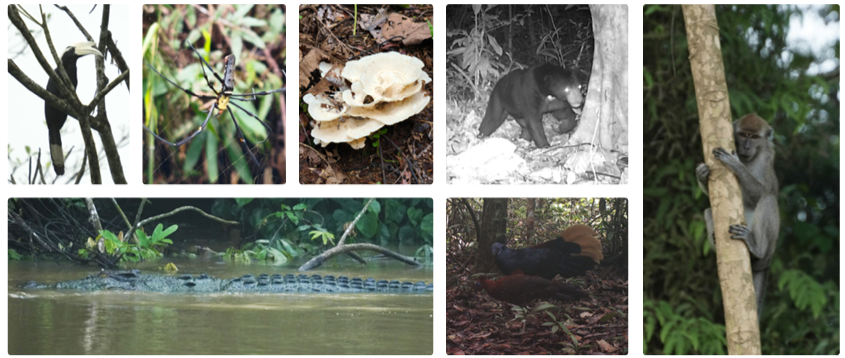
Below is documentation of the biodiversity within the company’s conservation areas.
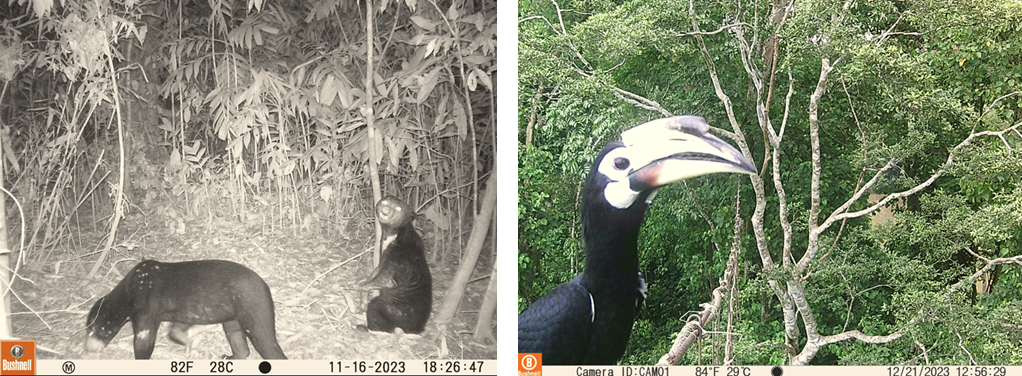
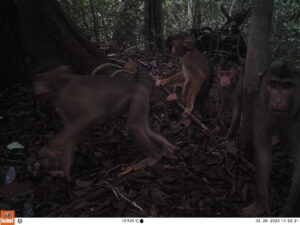
Southern Pig-tailed Macaque (Macaca nemestrina)
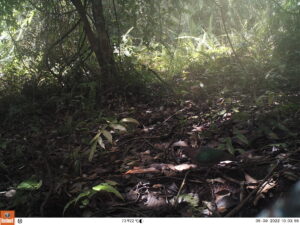
Emerald Dove (Chalcophaps indica)
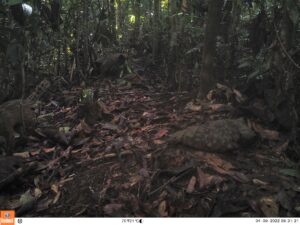
Marbled Cat (Pardofelis marmorata)
By 2025, the conservation area designated by the company for biodiversity protection is 8,733 ha. The conservation area has been demarcated. The conservation area contains a diversity of flora and fauna, including RTE (Rare, Threatened, or Endangered) species including Keruing, Red Meranti, Sengkuang, Bornean Orangutan, Bornean clouded leopard, Pangolin. We keep records of Fauna & Flora species listed according to the IUCN red list.
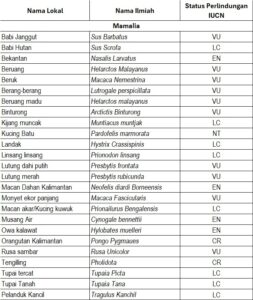
Types of Mammals
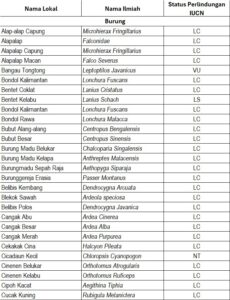
Types of Bird
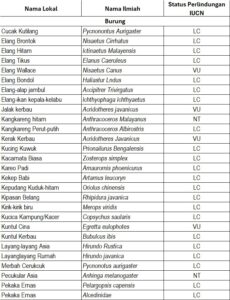
Types of Bird
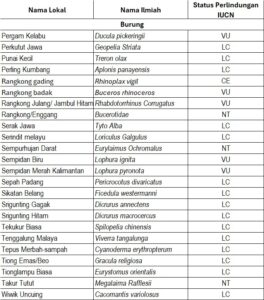
Types of Birds
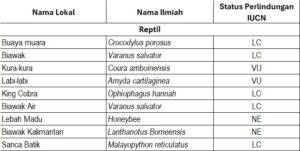
Types of Reptile
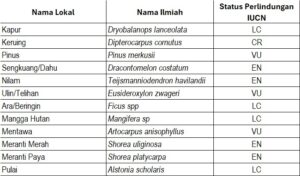
Types of Birds
Protection of Watersheds and Water Quality
Water is the most vital natural resource on Earth, supporting all living organisms. Thus, we prioritize the protection of watersheds and maintaining water quality to support aquatic life and prevent river pollution. Our SHE Conservation team continuously monitors water quality across all DSNG entities. We use aquatic biodiversity indicators, such as those in PT Swakarsa Sinarsentosa (SWA).
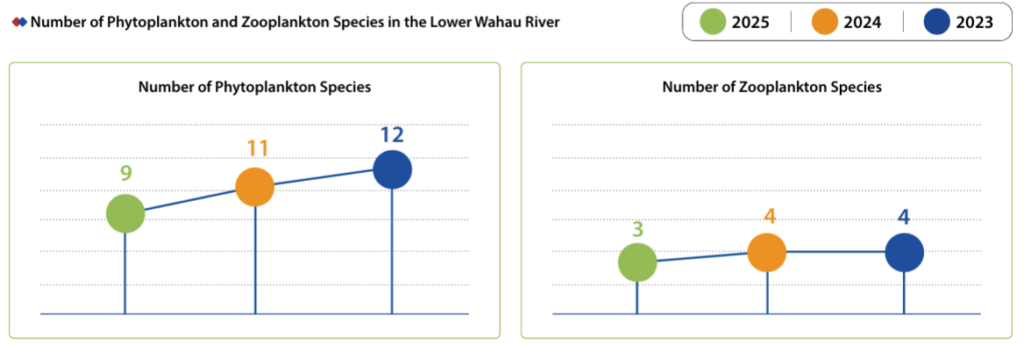
Aquatic invertebrate samples were taken from the Bengalon River, located within the PT SWA plantation and conservation area. At the same monitoring point as the previous year, DSNG recorded nine phytoplankton species and three zooplankton species in 2025.
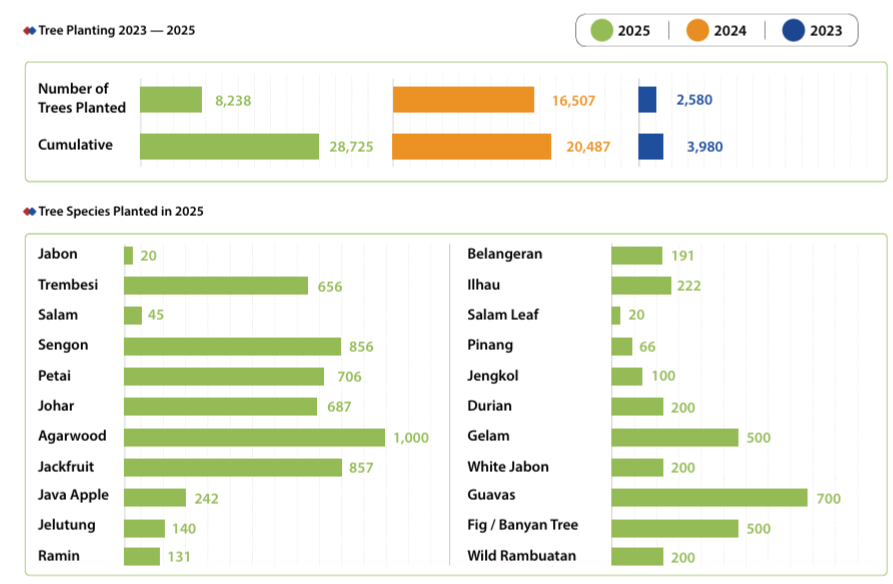
Tree Planting and Rehabilitation of Conservation Areas
Throughout 2025, DSNG planted 8,238 trees through rehabilitation, tree island development, remediation, and enrichment activities. These activities aim to strengthen habitat structure and increase vegetation diversity within the company’s conservation areas, which are home to a variety of wildlife.