Forest Protection
Our approach to forest protection extends beyond No Deforestation, with a comprehensive strategy that encompasses the active preservation and restoration of forests including degraded & deforested area inside and outside our concession areas to prior condition. We collaborate with various stakeholders to promote sustainable land-use practices, ensuring the long-term health of essential ecosystems.
A key aspect of our commitment is the rigorous monitoring and protection of biodiversity, and striving for an integrated landscape approach for key-species conservation. This holistic perspective balances ecological, social, and economic factors, fostering sustainable development and harmonious relationships with surrounding communities.
CONSERVATION PARTNERSHIPS
Maintaining conservation areas for animals and plants as well as riparian rivers is one of our commitments to the environment. To date, DSNG has set aside 10,562 hectares of land for conservation purposes representing approximately 9% of the total planted area to encourage biodiversity in our plantations.
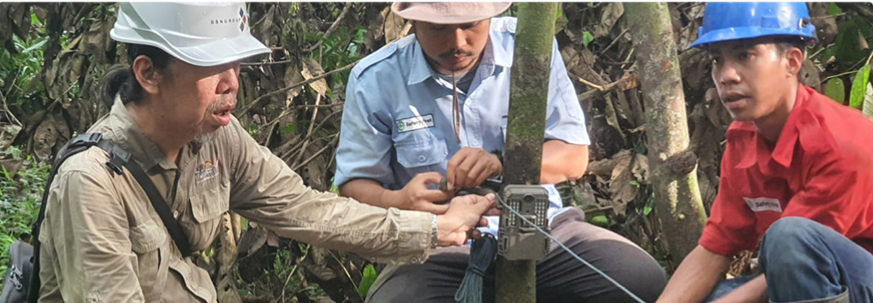
Riparian areas are maintained to conserve fauna, provide corridors for wildlife, ensure water quality and prevent erosion. To develop effective conservation strategies, we have entered into collaborations and partnerships with conservation experts. Among these partnerships we have had are :-
- The Faculty of Forestry of Gajah Mada University from 2009 to 2014
- The Borneo Orangutan Survival Foundation (BOSF) in 2014
- The Ecology and Conservation Center for Tropical Studies (Ecositrop) commencing in 2015 for Orangutan conservation
- USAID SEGAR for our Off Concession Conservation Area in 2022
- The Natural Resources Conservation Agency (BKSDA) for Orangutan Task Force training and rescue
- The Wehea Customary Institution and Nehas Liah Bing Village for conservation management at Melenyi PT Dewata Sawit Nusantara, and amongst others
- Collaboration between Nehas Liah Bing Village-Owned Enterprises (BUMDes) in HCV Management.
- Collaboration with the Suak Indigenous Community.
- Conservation Monitoring with SINTAS East Kalimantan
By the end of 2025, the Company will manage a conservation area of 16,355 hectares, encompassing conservation forest areas both inside and outside the concession area. This area represents approximately 15% of the total concession area. Throughout the year, DSNG continued to strengthen the implementation of the Remediation and Compensation Procedure (RaCP) Program with the RSPO in two locations outside the concession, namely Laman Satong and Lemmanis in Ketapang Regency, West Kalimantan, as part of the company’s commitment to preserving biodiversity and restoring ecosystem functions.
This collaborative program between LPHD Lemmanis and DSNG began in 2024 and will last for 25 years until 2049. This collaboration between LPHD Lemmanis and DSNG is part of DSNG’s remediation and compensation plan (RaCP) mechanism to meet RSPO requirements. The development and implementation of DSNG’s RSPO RaCP in the Lemmanis Village Forest in Sepakat Jaya Village was facilitated by Community Forest Ecosystem Services (CFES).
In 2025, DSNG implemented the Remediation and Compensation Program (RaCP) in the Manjau Village Forest, Laman Satong Village, Ketapang Regency, West Kalimantan, as part of its compliance with RSPO standards. This program provides compensation for conservation obligations covering 156.24 hectares, with a value of USD 390,600 allocated to support the management of 1,070 hectares of village forest. The program’s scope includes protecting high conservation value forests and strengthening community economies through sustainable agriculture, the use of non-timber forest products, and payment for environmental services schemes.
From January to December 2025, the RaCP program resulted in the protection of 654 hectares of conservation areas through routine patrols and SMART Patrols, with 3.13 hectares of identified deforestation. Rehabilitation activities covered an area of 11.28 hectares, planting 650 local seedlings out of a target of 2,000 seedlings produced in the nursery.
From a socio-economic perspective, the program supports the establishment of five Social Forestry Business Groups and the development of Batu Besampak ecotourism, with a female participation rate of 31.8%. In addition to the Manjau Village Forest, DSNG also runs a conservation program in Sepakat Jaya Village through a Hectare-to-Hectare financing scheme. Through this scheme, more than 6,967 hectares of forest area are managed with activities that include forest restoration, local plant enrichment, security patrols, community training, and carbon and wildlife monitoring.
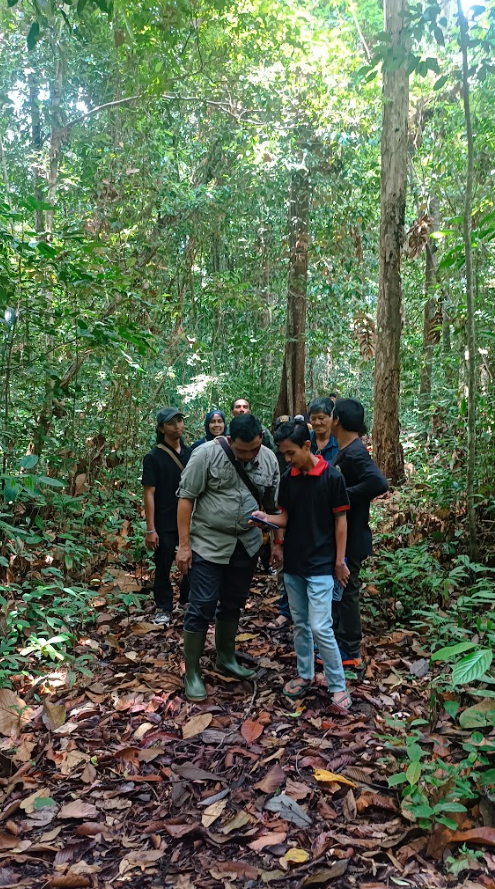
This cooperation marks an important milestone for our target to produce sustainable palm oil. More details can be seen here.
————————————————————————————————
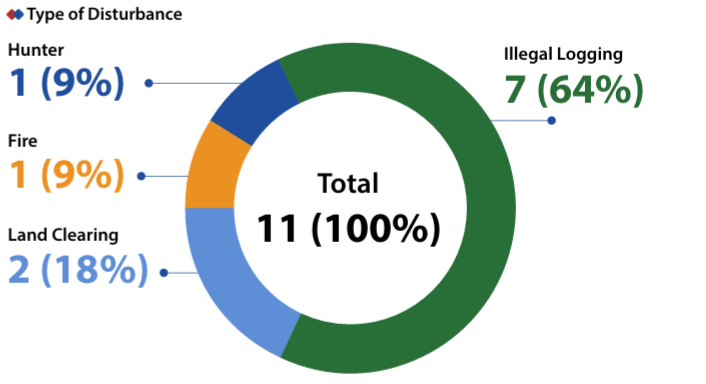
HCV DISRUPTION REPORT 2025
Conservation areas are routinely monitored through patrols to prevent potential threats that could disrupt habitat sustainability. DSNG uses the SMART Patrol app as its primary monitoring system due to its ability to record structured data and provide accurate statistical analysis. This approach helps us identify disturbance trends and wildlife dynamics, enabling more effective conservation area management.