Community Engagement and Collaboration
Emphasizing Shared Prosperity for Sustainable and Resilient Livelihoods
DSN Group’s commitment to community engagement, collaboration, and social inclusion is deeply rooted in our vision and founding tradition. We emphasize the development of sustainable and resilient livelihoods for communities in and around our operational areas through the principle of shared prosperity. By incorporating this commitment into our Group Sustainability Policy, we strive to ensure that these communities are not only safeguarded but also continue to thrive.
Our approach to sustainability involves empowering local communities, including indigenous peoples, and collaborating with external suppliers to promote environmentally friendly and socially responsible practices. Through our corporate social responsibility (CSR) initiatives, we invest in community development with a focus on education, healthcare, infrastructure, and livelihoods, working diligently to support indigenous communities and create job opportunities. Through this community engagement, DSNG strives to create mutually beneficial relationships with the community by contributing to economic growth and development and ensuring our operations’ long-term sustainability.
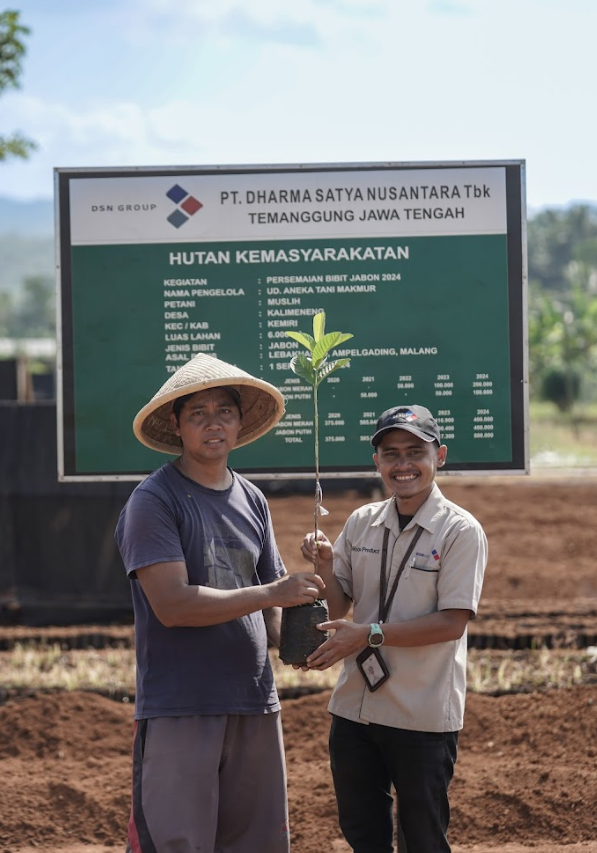
In an effort to strengthen sustainable supply chains, maintain environmental sustainability, and support climate change mitigation, the DSN WP Panel has distributed 3,805,000 jabon seedlings in Central Java from 2020 to 2025, with a total of 12,964 recipients.
The “Capacity Building for Climate-Resilient Agroforestry Systems for Smallholder Farmers” project is being implemented in Wonosobo, Magelang, and Temanggung Regencies. This initiative aims to encourage the adoption of climate-adaptive agroforestry practices, strengthen the capacity of farmer organizations, and improve financial literacy and sustainability. The project also includes piloting sustainable practices at the farmer level. Through this project, 25 farmers will become pioneers and trainers who can share their knowledge with other farmers. The program’s implementation is expected to increase farmer participation in jabon cultivation and provide an initial foundation for farmers to meet the FSC-FM certification requirements, both in terms of capacity and institutional aspects.