Responsible Supply Chain – Our Supply Chain and Landscapes
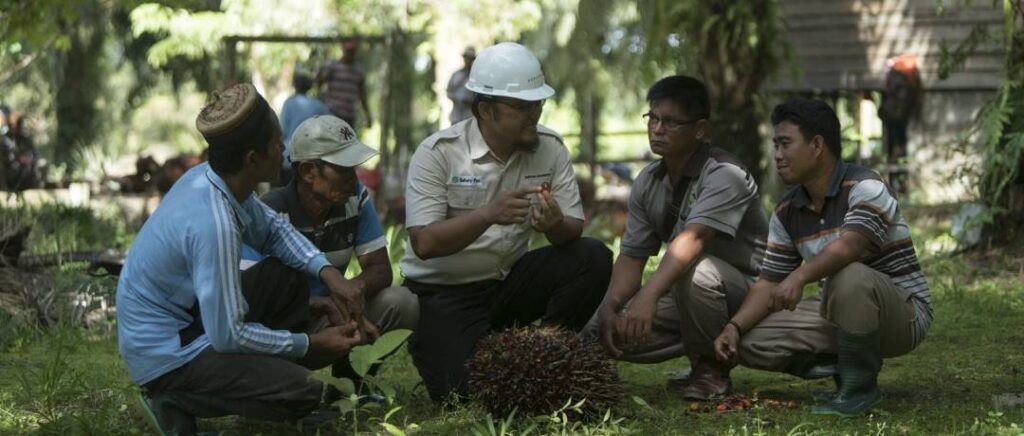
DSN Group manages 15 oil palm plantations with a concession area of 106,343 ha with 12 palm oil mills producing 631 thousand tons of CPO in 2025 and one Kernel Crushing Plant (KCP) producing Palm Kernel Oil (PKO) with a KCP processing capacity of 400 tons/day. These 15 plantations are grouped into 8 landscapes:
- Bulungan in North Kalimantan
- Wahau, Bengalon, Karangan and Mahakam in East Kalimantan
- Lamandau in Central Kalimantan
- Sekadau dan Sintang in West Kalimantan.
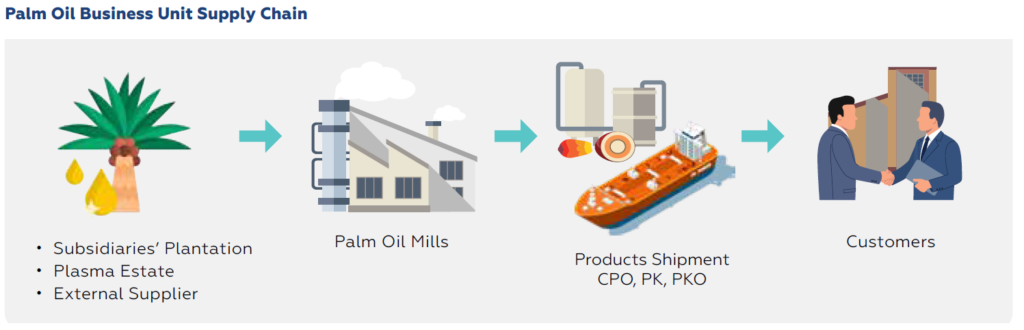
Based on those landscapes, we have identified our supply chain for Fresh Fruit Bunch that constitutes approximately 61% from own plantation, 17% from plasma and 22% from external sources. Further this FFB 3rd party supply chain supply chain can be categorised into :
- Independent Plantation Companies;
- Smallholders via SAPRODI Co-operatives;
- Smallholder via External Cooperatives;
- Smallholder via Agents.
While the we expect Independent Plantation Companies to have better capabilities to comply with our NDPE policies, the smallholders and as well as the FFB agents will have more challenges to comply and therein DSN Group shall specifically play a proactive role to engage with the smallholders and agents to as much as possible ensure inclusion and where necessary offer assistance to those that are most vulnerable.
Our Plasma or scheme smallholder boundaries and maps have been made available to the RSPO as part of our nucleus estate maps for various processes within RSPO. These maps in shapefile formats are available on GeoRSPO. GeoRSPO is an interactive mapping platform developed by RSPO in partnership with the World Resources Institute (WRI). It features concession maps submitted by RSPO grower members as well as processor and trader members, a mandatory requirement to secure RSPO Certification that promotes transparency in plantation concession boundaries. Please refer to:
In our Wood Product Business Unit, the Company collaborates with sengon farmers and its collection partners to secure sustainable sengon wood supplies from managed Community Forest. The sengon wood is derived from traceable sources compliant with the Indonesian Timber Legality Assurance System (SLVK) as a raw material for its wood products.

Wood Pellet Product Business Unit
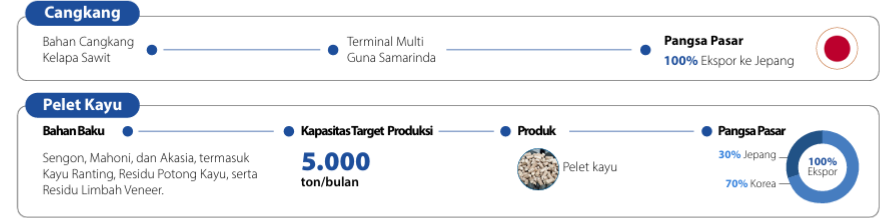
By 2025, the Renewable Energy Business Unit (Wood Pellets) will achieve 100% traceability to suppliers including depots, sawmills, agents, and other suppliers, with a total wood volume of 76,098 tons originating from sengon, mahogany, and acacia, including twig wood, wood cutting residue, and veneer waste residue.
Details on our supply chain from our 3 business units of palm oil, wood products, and renewable energy can be found in our Sustainability Report.