Biodiversity Protection Commitment
DSN Group is committed to protecting High Carbon Stock (HCS) and High Conservation Value (HCV) forests, including riparian zones as well as the following :
- DSN Group does not carry out any development of land with high carbon or conservation value and peatlands. The company is committed to zero conversion of all natural ecosystems for all its own operations and supplier throughout its supply chain, especially areas that have been designated as international or nationally protected areas.
- DSN Group respect the rights of indigenous peoples and local communities in line with its NDPE Policy.
- DSN Group also actively monitors the conservation areas as an effort to proactively protect these valuable ecosystems.
- DSN Group as a member of RSPO, therefore is committed to RSPO’s No Deforestation commitment as prescribed in its P&C 2018 Standard.
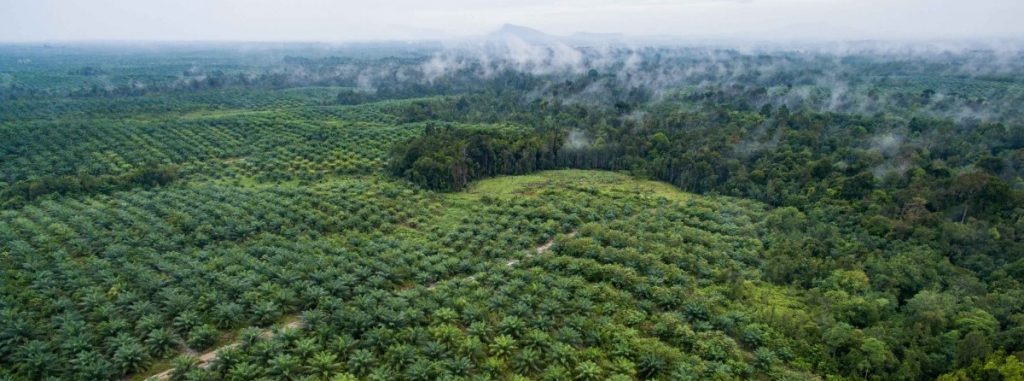
Through its Sustainability Policy and NDPE, DSNG is committed to identifying and protecting High Conservation Value (HCV) areas and High Carbon Stock (HCS) forests throughout the concession, maintaining conservation areas and watersheds to conserve fauna, provide wildlife corridors, maintain water quality, and prevent erosion. Riparian areas are maintained, and conservation strategies are developed in partnership with experts.
To implement these commitments, DSNG has established a procedure for “Conservation of Protected Flora and Fauna” based on the IUCN Red List, applicable in our HCV/HCS conservation areas. Awareness campaigns are conducted through the installation of warning signs, images of protected species, and meetings with employees, students, and local communities. We also prohibit testing on animals within the Company. In addition, we continue to maintain 8,733 hectares of conservation areas in our concessions and restore degraded forest areas.
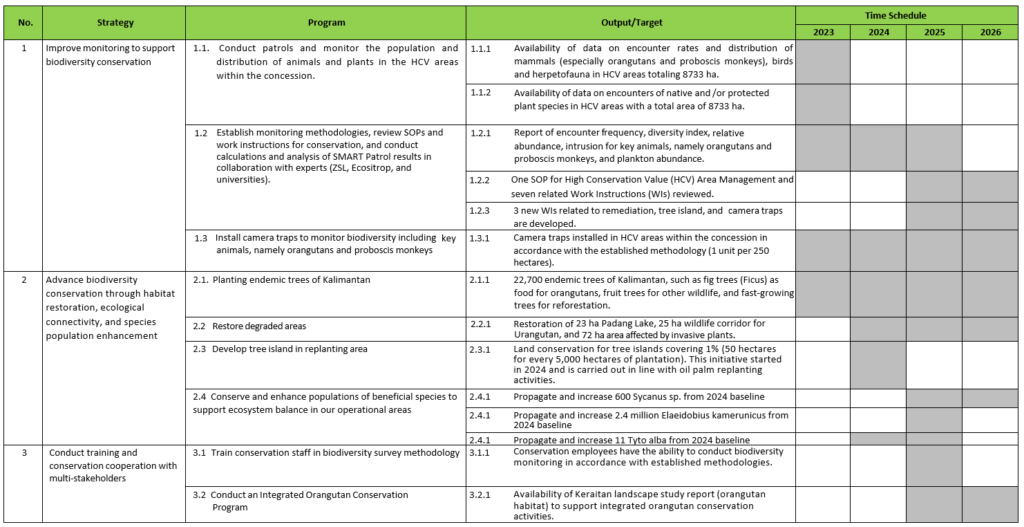
Biodiversity Conservation Strategy, Program and Target
Our commitment to protecting biodiversity is reflected in the clear, timebound targets we have set to safeguard key species, including orangutans and proboscis monkeys. We focus on wildlife monitoring, habitat restoration, and collaboration with multiple stakeholders. The targets below outline our key actions to protect and enhance biodiversity up to 2026.