When Fire Crosses Boundaries: PT Pilar Wanapersada Supports Firefighting Efforts Alongside the Community
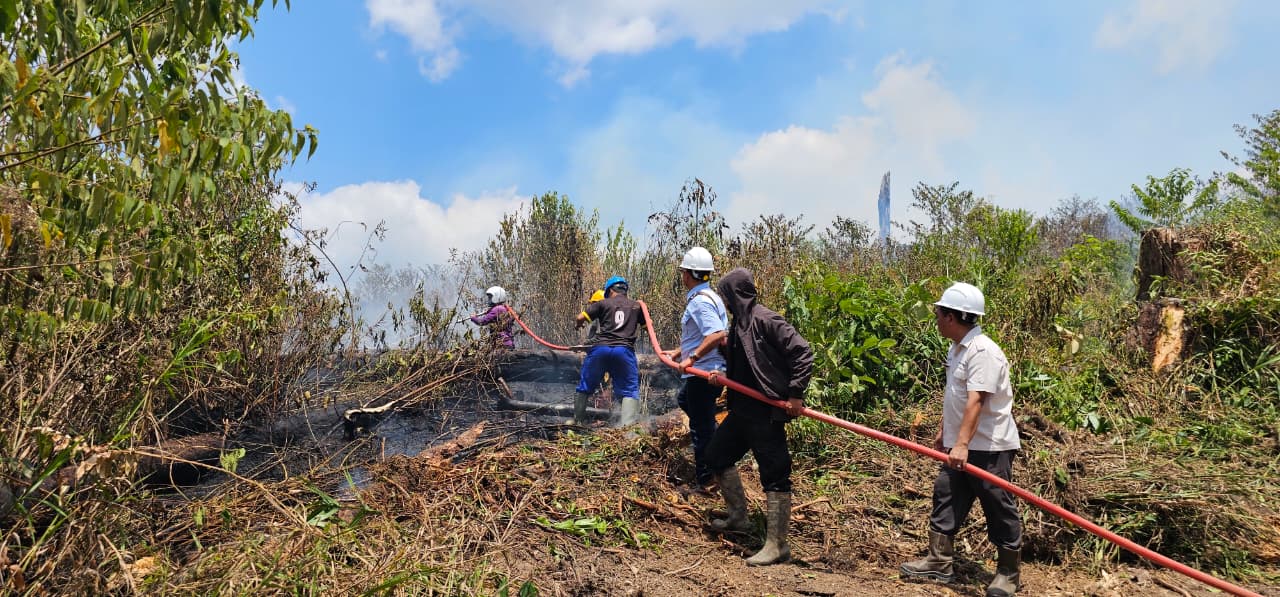
Fire knows no administrative boundaries. When a fire breaks out, smoke and embers do not stop at property lines. That is why preparedness for forest and land fires should not stop at the boundaries of an operational area.
This was evident when a fire broke out across village nearby the company’s operation area. The fire located around two kilometers outside the Hak Guna Usaha (HGU) area of PT Pilar Wanapersada.
Although the fire occurred outside the Company’s HGU, a response was still provided. In my view, the Company’s decision to take direct action demonstrates that forest and land fire response requires a broader perspective.
When a fire occurs near an operational area and has the potential to affect the surrounding environment and communities, land ownership boundaries should not become a reason for inaction.
Moving Before the Fire Spreads
As soon as information about the fire was received, coordination was established with local government authorities, security forces, and the Regional Disaster Management Agency (BPBD). The Company’s management also went directly to the field to monitor the firefighting efforts.
What followed was more than a symbolic presence. PT Pilar Wanapersada mobilized personnel and equipment to help accelerate efforts to control the fire. At least three firefighting teams were deployed, involving approximately 60 personnel in total.
On the ground, dozens of personnel worked together, supported by a range of equipment prepared to deal with the challenging conditions. One backhoe loader was deployed to help open access routes and address difficult terrain. Four water tanks were prepared to support the water supply, while eight double-cabin vehicles were used for personnel and equipment mobilization.
One ambulance was also placed on standby to support personnel safety. Mobility across the difficult terrain was further supported by 20 motorcycles and 15 portable water pumps.
Seeing the Fire Up Close, Monitoring from Above
Terrain became one of the biggest challenges during the firefighting operation. The affected area was located in hilly terrain with steep contours, making access to the fire more difficult and requiring a more carefully coordinated approach to fire suppression.
Under these conditions, monitoring became an important part of the operation. A drone was deployed to provide an aerial view of the affected area, while 12 handheld radios (HTs) were used to maintain communication among teams in the field.
The combination of aerial monitoring, inter-team communication, support vehicles, pumps, and water supplies allowed the teams to gain a faster understanding of the fire’s movement and the response required at different locations.
For me, technology and equipment in a situation like this are far more than supplementary tools. They are part of the way decisions can be made more quickly as conditions on the ground continue to change.
Full Strength, Safety Remains the Priority
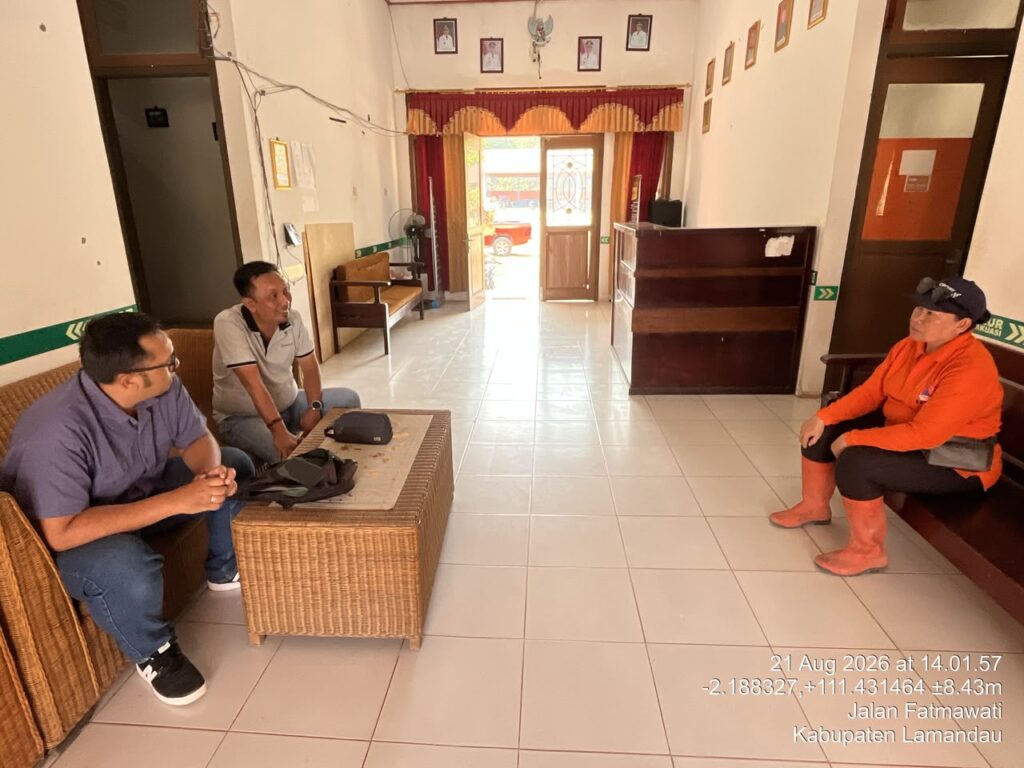
The scale of the resources deployed did not mean that firefighting was carried out without careful consideration. Amid steep terrain and fire conditions that still required control, personnel safety remained an essential part of every step. Fire suppression efforts were conducted with careful consideration of field conditions and the risks faced by the firefighting teams.
This is important because a firefighting operation is not simply about how quickly a fire can be extinguished. It is also about ensuring that every person involved can carry out their responsibilities safely. From the field, it was clear that each element had a role to play. Some focused on direct firefighting, others supported water supplies, while additional teams ensured that mobilization, monitoring, and communication continued effectively.
Everyone moved toward the same goal: containing the fire before it could spread further.
When Responsibility Goes Beyond the HGU Boundary
One aspect of this incident that I find particularly significant is the location of the fire. The fire did not occur within PT Pilar Wanapersada’s HGU. The affected area was approximately two kilometers from the Company’s operational area. Yet the response was still provided.
To me, this demonstrates that environmental responsibility can extend beyond operational boundaries. When a company operates alongside communities and the environment surrounding its working areas, environmental issues occurring nearby can also become part of a shared concern.
In the context of forest and land fires, this approach becomes even more relevant. A fire outside a company’s operational area can continue to grow, spread, and create wider impacts if it is not brought under control quickly. That is why providing support at an early stage is not simply about extinguishing a single fire. More importantly, it is part of an effort to prevent a potentially larger impact.
The Fire May Be Out, but Vigilance Remains
At the time of monitoring, the suspected cause of the fire was still under investigation by the relevant authorities. Determining how the fire started therefore remained subject to further investigation. But one thing was already clear: when a fire occurs, a rapid response can make a significant difference.
Around 60 personnel, dozens of vehicles and firefighting equipment, communication support, and aerial monitoring were mobilized to respond to a fire in challenging terrain. All these resources demonstrate that preparedness is not something that can be built once a fire has already grown. It must be established long before the flames appear.
For me, this is a story of how environmental concern can be translated into concrete action. Because in the end, a fire may start beyond the boundaries of our operational area, but our responsibility to protect the environment should not stop there.